Morning Macro Friday 26th September
Trump announces 100% pharma tariffs from 1 October, except for companies building their manufacturing plant in the US. Pharma shares like Astrazeneca and GSK fall around 1%. Trump also revealed tariffs on some very… niche… goods: 50% on kitchen cabinets, bathroom vanities and associated products, 30% on upholstered furniture and 25% on heavy trucks. Bloomberg says these new tariffs could raise average tariff rates by 3.3%.
US economic data revised higher. GDP expanded at a 3.8% annualised pace in Q2, above 3.3% in the previous estimate, to the fastest in nearly two years. This was powered by 2.5% consumer spending and a blistering 7.3% jump in business investment, led by record outlays on intellectual property and data centres – the backbone of the AI boom.
After a tariff-driven contraction in Q1, the economy has snapped back with force. Business spending is surging, households are still buying, and layoffs remain rare. Markets were less impressed – stocks fell and yields eased – but the picture is clear: America’s growth engine is still very much switched on.
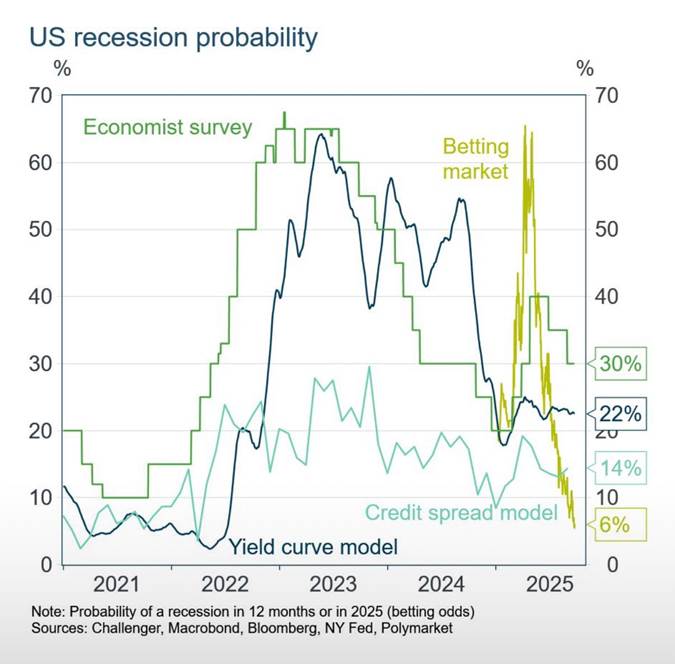
Bets on US recession have dropped from a high of over 60% early this year to 6% now on Polymarket. (Figure 1)
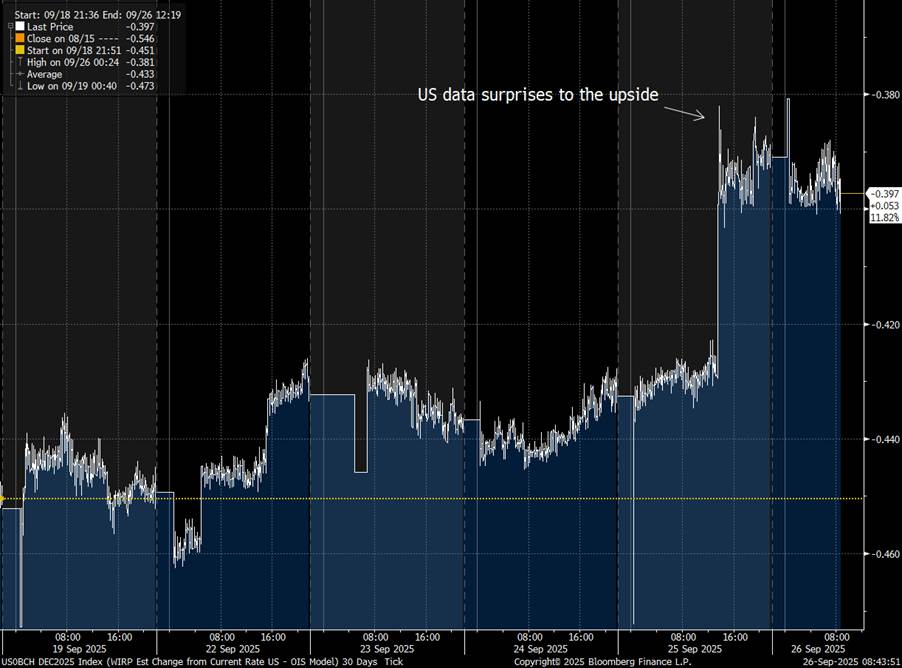
Fresh labour market data revealed jobless claims fell to their lowest since mid-July and unemployment claims slipped by 14k to 218k, far below expectations. Most firms are clinging to workers despite slower hiring, keeping the labour market cooler but intact. Markets now pricing less Fed cutting after strong macro prints in the US, with OIS now pricing under 40 bps. They also expect the Fed’s neutral rate – where policy is neither boosting nor slowing growth – to settle near 3%, higher than before.
The repricing briefly lifted 10-year yields to a three-week high near 4.1%. Positioning data shows investors hedging both more aggressive and less aggressive Fed outcomes, with heavy activity in SOFR options targeting small cuts. (Figure 2)
S&P 500 begins to rollover, dropping for 3 straight sessions for the first time since late August. In the week to 17 Sep, equity funds absorbed $68.4bn, the biggest weekly inflow of 2025, with a single S&P 500 ETF taking $30bn. Bond funds added $14.3bn (YTD >$600bn), alternatives gained $8.2bn (crypto $3.8bn), and EM equities drew $7.6bn.
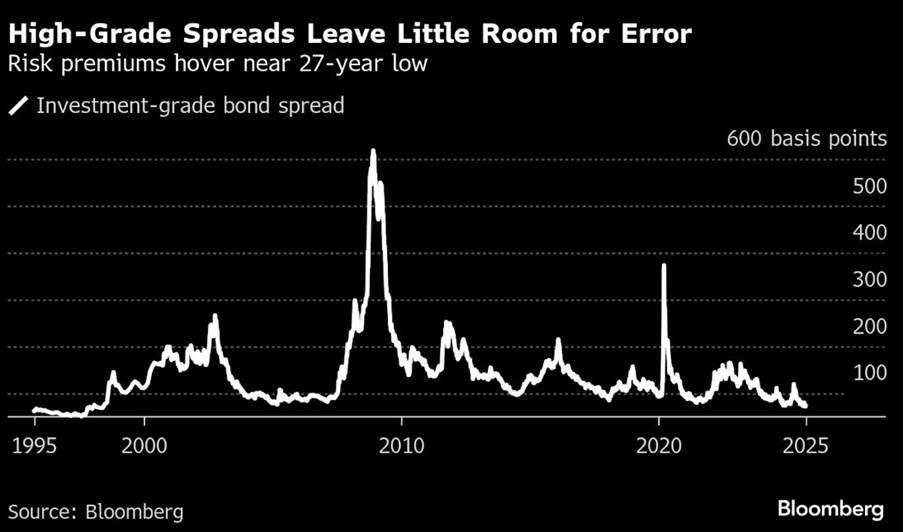
But markets remain confident as investment grade credit spreads are near 27-year lows. (Figure 3) Is default risk low or is the market becoming complacent?
Japanese inflation came in cooler than expected, with Tokyo core CPI came at 2.5% y/y in September, below consensus of 2.8%. The headline figure was steady at 2.5% too, after a downward revision for August.
Data today: PCE, Canada GDP, Christine Lagarde speech